
There are men who change your life without ever knowing your name.
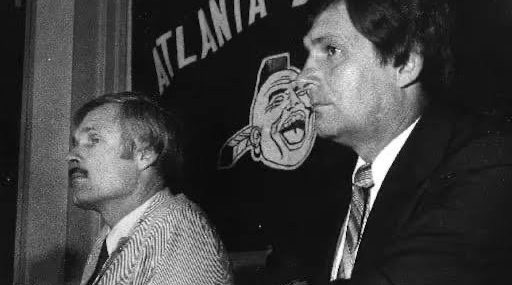
Ted Turner was one of those men for me. So was Bobby Cox.
Turner created the SuperStation, and with it gave kids like me a gift we didn’t yet understand. We got the chance to watch our favorite team every single night. Before that, baseball was something you caught when the networks felt like it or when your parents could afford tickets. Turner decided that wasn’t good enough. He put the Atlanta Braves on cable and let the rest of the country decide whether they liked it.
They did.
As a kid, that meant I didn’t just follow the Braves. I lived with them. They were there after homework, during summer nights, and on evenings when nothing else seemed to matter. That kind of loyalty doesn’t happen by accident. It happens because someone with vision decided access mattered.
Turner did that. Loudly.
As a journalist, I admired Turner for creating CNN, for refusing to wait until 6:30 p.m. to tell the world what just happened. Once, on an assignment to interview CNN’s president, I overheard him calling King Hussein of Jordan during the Gulf War to make sure his reporters would be safe leaving Iraq. That was Ted Turner — brash, fearless, and deeply invested in the people doing the work.
But as a baseball fan, my love for Turner is inseparable from Bobby Cox.
If Turner put the Braves on the map, Cox turned them into a destination.
Cox was a player’s manager in the purest sense of the phrase. His players loved him — not because he coddled them, but because he trusted them. He stood up for them. Often literally. He was thrown out of more games than any manager in the 120-plus-year history of Major League Baseball, and not because he liked the walk to the clubhouse.
He did it because someone needed to take the heat.
Bobby Cox argued with umpires the way some men argue with fate — calmly at first, then with conviction, then with the understanding that the outcome didn’t matter nearly as much as the message. His message was always the same: My players come first.
Under Cox, the Braves didn’t just win. They became something stable, disciplined, and quietly confident. Division titles piled up. Pitchers became legends. And in 1995, the team Turner made visible became World Champions.
That mattered to a kid watching every night.
Turner and Cox couldn’t have been more different in temperament. Turner was loud, opinionated, and impossible to ignore. Cox was steady, measured, and rarely raised his voice — until it was time. One changed television by talking. The other changed baseball by listening.
But together, they shaped something bigger than either one alone.
They gave a generation of fans a team to believe in, night after night, year after year. They put Atlanta on the national stage and kept it there. One with satellites and breaking news banners. The other with a lineup card and a bullpen phone.
Two giants. Two legends. Two men who left fingerprints all over my life without ever shaking my hand.
Ted Turner taught me the world was bigger than my living room. Bobby Cox taught me loyalty, leadership, and when it was worth getting tossed.
And every time I see a Braves cap in some far-off city, I think of both of them — the man who made sure we could watch, and the man who made it worth watching.
 My View From the cheap seats